
Pest control
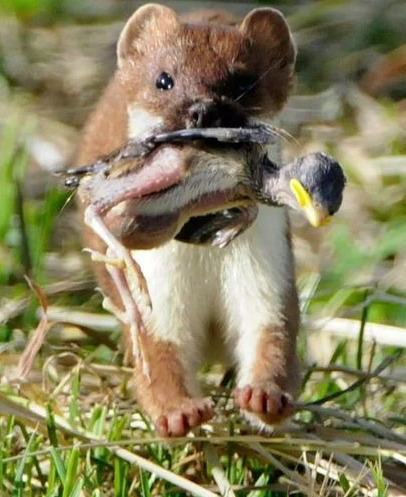
Stoat with a chick from a nest
The 34ha Botanical Gardens are adjacent to houses or roads on about two thirds of its boundary, but a large paddock and weed-infested gully are located to the north and east of the site. It is from here that introduced mammalian pests can invade the Gardens, given half a chance. In 2005, Richard Clere wrote in the second volume of the history of the Gardens:
Rabbits and opossums have always caused damage to new planting in the Reserve. In 1972 an early volunteer was Shirley Jones. She was a keen sportswoman and crack rifle shot. She offered to tackle the pest problem, and on her retirement in 1986 gave me a list of her kills. It read as follows: 467 opossums, 206 rabbits,10 hares, 7 rats, 3 deer and 1 pig.
While we currently don't see any hares, pigs or deer in the Gardens, we still have incursions of possums, rabbits, weasels, stoats, rats and mice. The Reserve is owned by the Department of Conservation, thus the use of firearms or poison is not permitted within the boundary. As the trees and shrubs have become more established, the control of pests in the Gardens is not only part of the community good that must be carried out, but it should greatly improve the revival of native flora and fauna in the area. Our pest control mission is to see just how many native birds and trees can flourish in a 34ha space close to a large township.
From 2013, we have set up traplines around the Gardens, mostly well out of sight. The Gardens are now well protected. There are a total of 330 active trapping points evenly spaced within the boundaries, with a target to be checked once a week. Most of the control points are wooden boxes with T-Rex rat traps inside (for rats and mice) and DOC200 general purpose traps (for mustelids and rats). There are 49 mostly Timms traps (for possums), and one resettable AT220 (for possums and rats). Since 2013, previous board member and keen volunteer Hugh Eccles has been the main person involved in trapping. Alan Griffith, Graham Lynch, Richard Keir and Rob Kerridge have helped out from 2019 onwards. All the catch data has been logged into the TrapNZ website, and this allows us to report on monthly catches since 2013.
With good trap density and regular clearing of traps, we have a good rate of success: we seem to be keeping weasels and stoats under tight control and the rat and possum populations are generally low, and are even making progress with mice and rabbits. Many people have commented that they have heard more birdsong in the Gardens each year, especially korimako (bellbird) and tui. Several kererū frequent the gardens. We are watching for rarer birds like robins and kaka to take up residence.

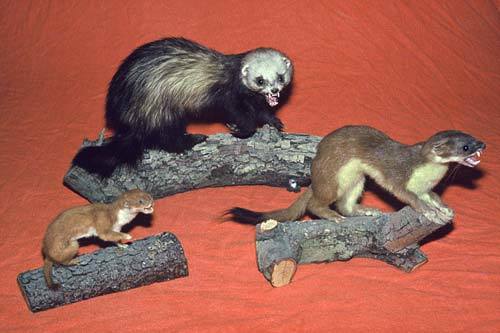
Mustelids
Mustelids (left to right: weasel, ferret and stoat) were introduced into New Zealand in the 1870's and 1880's to control rabbits. However, all three have become pests in their own right. By far the worst, in terms of their predations on native species, are stoats, followed by ferrets. Weasels and stoats are sometimes caught in the Gardens. Their main prey is rats and mice, but they will turn on the bird population if we don't keep them under control.
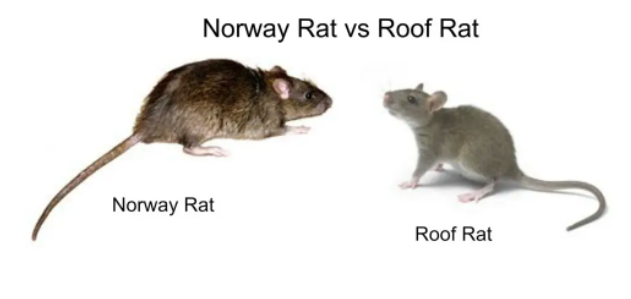
Rats
Rattus Rattus, the common or roof rat, is the most commonly found rat in the Gardens. They generally live above ground, and are smaller than the Norway rat. Rattus Norvegicus, the Norway or brown or water rats are larger, live in burrows, and often live close to humans or waterways. Both can climb trees and are predators of juvenile birds and eggs.
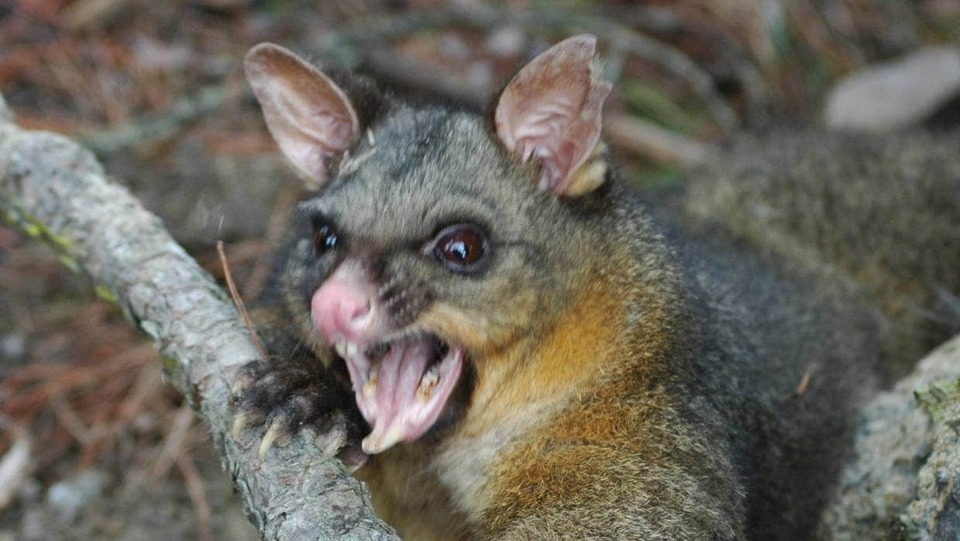
Brushtail Possum - Predator Free NZ
Two concerted efforts in establishing the Australian brushtail possums for their fur, resulted in an ecological nightmare for NZ. Now 30 million of them are spread around the country, helping to spread bovine TB and chomping through our forests, paddocks and native nestling birds. Thanks in part to a grant from the Waikato Regional Council Small Scale Community Initiatives Fund, we have doubled our possum traps in 2024 to have one per hectare, to keep possum numbers low. Other new baits and traps will be deployed on rodents.
Cats Hunting in the Gardens
Cat owners can help safeguard our gardens from predators by following a few simple suggestions, here.
| Top |